Summer's twilight; islands
I visited Herring Island this morning. The 3.2 hectare blob of land in the middle of the Yarra started life as a blob of mud piled up when the course of the river was changed to prevent nearby suburbs from flooding. Now, it’s an environmental and sculpture park, home to sprawling gums, spreading climbers, pepper trees and nine sculptures made of natural materials. It’s a most pleasant ramble. Stumbling upon the sculptures makes for a happy little treasure hunt. There’s even an art gallery on site. I caught the penultimate day of an exhibit of hundreds of works of art constricted to the dimensions of an A4 piece of paper.
Being on an island was oddly comforting. I wondered whether I’d feel trapped, not being able to walk back anytime I wanted – one is beholden to a 12-passenger punt that crosses back and forth between landings in easy sight of each other. (The proximity between one landing and the next is close enough to be comical.)
Home again, I basked in the warmth of the last of the summer sunshine I so appreciatively soaked into my skin. It’ll help when the coming chill really sets in.
To extend the summer just a little more, I began reading Tove Jansson’s The Summer Book, which I bought at The Chatham Bookstore in upstate New York recently. In a happy coincidence, the book’s set on an island where Grandmother, Papa and 6-year-old Sophia are spending the spring and summer. I wanted to share some extracts, from the chapter titled ‘The Scolder’:
Grandmother looked at the oil stove, which had gone out, and at the clock, which said three. Then she got out of bed and put on her clothes, took her walking stick, and hobbled down the stone steps. It was a dead-calm night, and she wanted to listen to the long-tailed ducks. … They are called scolders, because their cry is a steady, chiding chatter, farther and farther away, farther and farther out. …
Grandmother walked up over the bare granite and thought about birds in general. It seemed to her that no other creature had the same dramatic capacity to underline and perfect events – the shifts in the seasons and the weather, the changes that run through people themselves. … For Grandmother, long-tailed ducks meant anticipation and renewal. She walked carefully across the rock on her stiff legs, and when she came to the little cottage she knocked on the window. Sophia woke up at once and came outside.
“I’m going to go listen to the long-tails,” Grandmother said.
Sophia got dressed and they walked on together. … It was very close to sunrise, and the fog out over the sea was already suffused with light. The long-tailed ducks kept up their steady call, distant and melodious.
“They’re breeding,” Sophia said.
The sun came up. The fog glowed for an instant and then simply vanished. Out on a flat rock in the water lay a scolder. It was wet and dead and looked like a wrung-out plastic bag. Sophia declared that it was an old crow, but Grandmother didn’t believe her.
“But it’s spring!” Sophia said. “They don’t die now; they’re brand new and just married – that’s what you said!”
“Well,” Grandmother said, “it did die all the same.” …
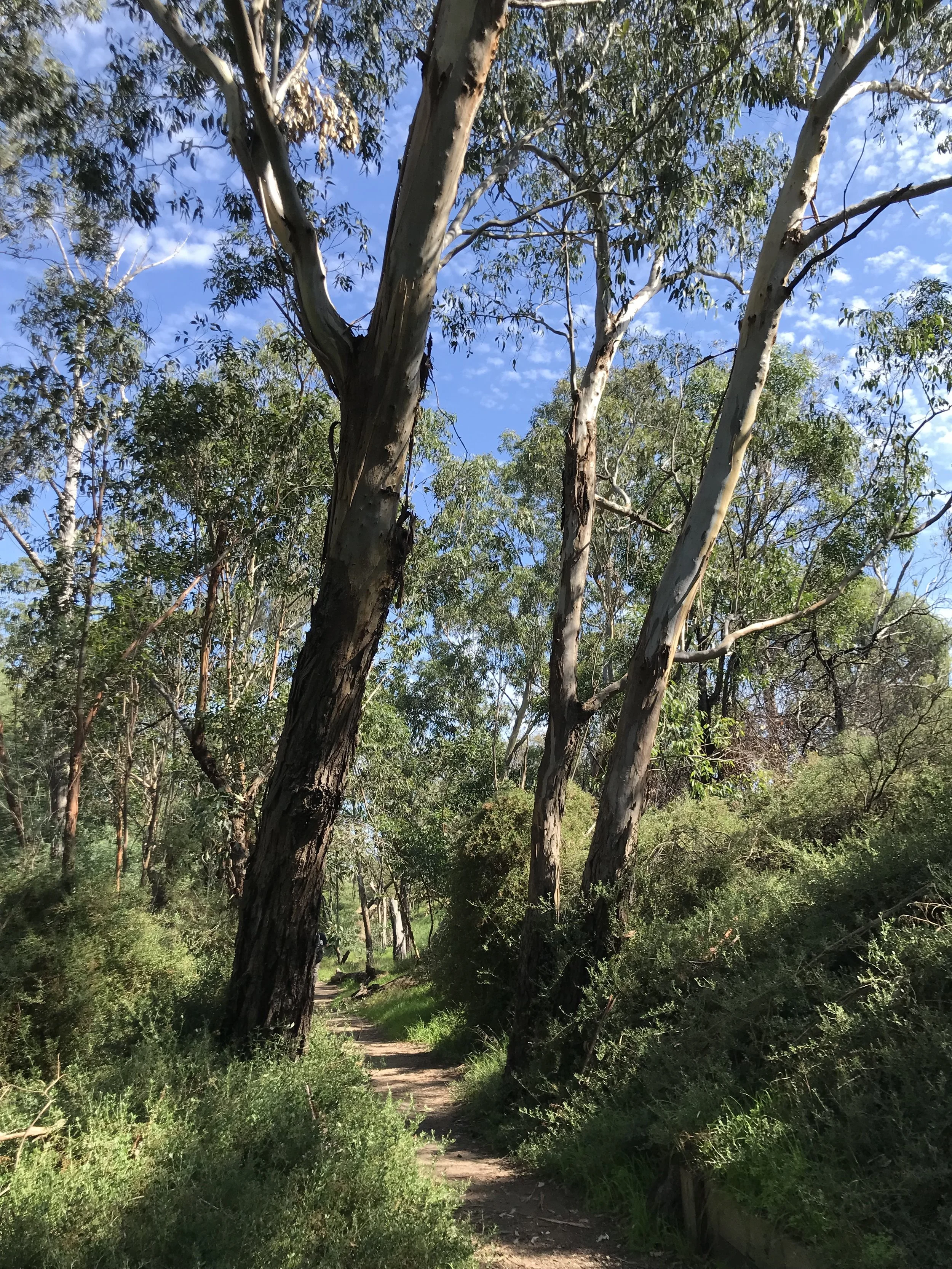
Herring Island, Melbourne
They walked on and talked about burial at sea, and the long-tails sang in dyads and triads, farther and farther away. …
“We ought to save it,” Grandmother said, poking the sand with her stick. “If the sea rises and we get a north wind, all of it will wash back out again.”
She stretched out full length on a bed of whitened reeds and looked at the sky. Sophia lay down beside her. It was growing warmer all the time, and after a while they heard the curiously chilly, somehow veiled sound of migratory birds in flight and watched a whole flock fly in over the island toward the northeast.
“What’ll we do now?” Sophia said.
Grandmother suggested that Sophia walk around the point and see what had drifted ashore.
“Are you sure you won’t be bored?” Sophia asked.
“Absolutely sure,” Grandmother said.
She turned on her side and put her arm over her head. Between the arm of her sweater, her hat, and the white reeds, she could see a triangle of sky, sea, and sand – quite a small triangle. There was a blade of grass in the sand beside her, and between its sawtoothed leaves it held a piece of seabird down. She carefully observed the construction of this piece of down – the taut white rib in the middle, surrounded by the down itself, which was pale brown and lighter than the air, and then darker and shiny toward the tip, which ended in a tiny but spirited curve. The down moved in a draft of air too slight for her to feel. She noted that the blade of grass and the down were at precisely the right distance for her eyes. She wondered if the down had caught on the grass now, in the spring, maybe during the night, or if it had been there all winter. She saw the conical depression in the sand at the foot of the blade of grass and the wisp of seaweed that had twined around the stem. Right next to it lay a piece of bark. If you looked at it for a long time it grew and became a very ancient mountain.